For years now, people have been begging Facebook for the capability to react beyond a ‘like’. Think of all the instances that people post status updates on Facebook. These are not all happy posts. If someone has a family member pass away, and they write a heartfelt tribute to the person, do you like it? It was a nice sentiment, but someone has still passed away. Many people suggested a ‘dislike’ button. That idea was vetoed by Facebook for the possible negative uses of the function. So, what did they decide to do instead? Well, they did expand the capabilities of the ‘like’ button by launching ‘reactions’.
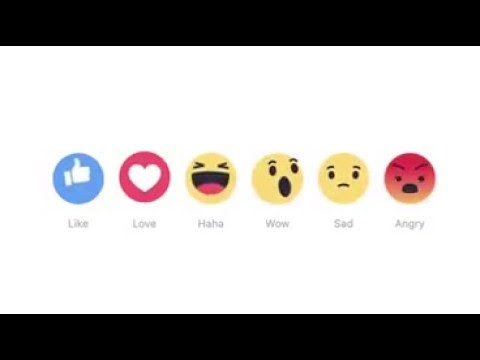
What do these reactions do exactly? They give users the ability to ‘like’ posts the same as before, but now users can also: love a post, express humor over a post, be shocked by a post, react with sadness or anger to a post. Essentially, they have taken the ‘like’ button and built on that. The functionality is simple. Users can either hold down the ‘like’ button on their mobile device or hover over the ‘like’ button on a computer. Then, an expanded reactions menu pops up. The reactions are pictured as emojis and users are then able to choose from six different reactions. These are: Like, Love, Haha, Wow, Sad, and Angry.
How did they settle on these six?
Facebook decided to focus on the sentiments its users expressed most often. […] They looked at the most frequently used stickers, emoji, and one-word comments and found a few common emotional threads amidst an ocean of diverse sentiments. “When we built the stickers for Facebook the most common thing people sent was love,” Keltner says. People used the hearts-in-the-eyes emoji more than any other. They were also prone to expressing humor, sadness, and shock through visual means. The team took a subset of reactions that cut across the emotional spectrum and removed redundancies like sympathy and sadness, and joy and love. Then they tested them with users.
As always, Facebook is using the data collected from the way people react to alter newsfeeds based on their reaction preferences and specifically tailor user experiences.
Facebook’s product manager Sammi Krug explains:
Initially, just as we do when someone likes a post, if someone uses a Reaction, we will infer they want to see more of that type of post. In the beginning, it won’t matter if someone likes, “wows” or “sads” a post — we will initially use any Reaction similar to a Like to infer that you want to see more of that type of content. Over time we hope to learn how the different Reactions should be weighted differently by News Feed to do a better job of showing everyone the stories they most want to see.
Now that Facebook’s reactions are fully integrated and have been in use for a few months, what do you think of them? Do you use them? If so, what is your most used so far? Mine has been love. How do you think that these new ‘reactions’ will begin impacting social media marketing? How can marketers use them to their advantage? Comment below!